
IT TAKES ONE
But It's Kinda Tough!
3D Puzzle Platformer made in Unreal Engine for Fornite

TOOLS:
UEFN

TEAM:
Solo Project

ROLE:
Level Designer

TIMELINE:
5 weeks
Project Goal
Challenge: Demonstrate ability to develop a level based of an existing game within a game level editor my choice.
My goal was to make a level based off studying the environment and pacing of Hazelight's 2021 Game of the Year winner, It Takes Two, and what makes the gameplay so engaging for players of all skill levels and playstyles.
Because of scope and the limitations of UEFN, my goal was take inspiration from aspects of the game without the co-op element and with a 10-15 minute gameplay length.
It Takes Two Case Study
What makes It Takes Two a successful couch co-op —apart from its co-op?
TAKEAWAYS


MIXING GENRES
Switches between gameplay genres every level to keep the levels interesting and prevents one style from growing stale over the game's runtime

FLOW STATE
Visually compelling points of refuge, sufficient teaching, and unique mechanics that are new to every player to accomodate for the skill levels of older family members who would otherwise have an inbalanced state of flow

EXPLORATION
Facilitate curiosity by littering points of refuge with whimsical minigames and side-interactions as contextually cohesive collectables

Process
ENVIRONMENT

STORY

FEATURE

First, I started my process off by collecting reference images and brainstorming what environment the levels should be built around, what kind of story would make the elements seem more cohesive, and what a main feature could be.
MIXING GENRES


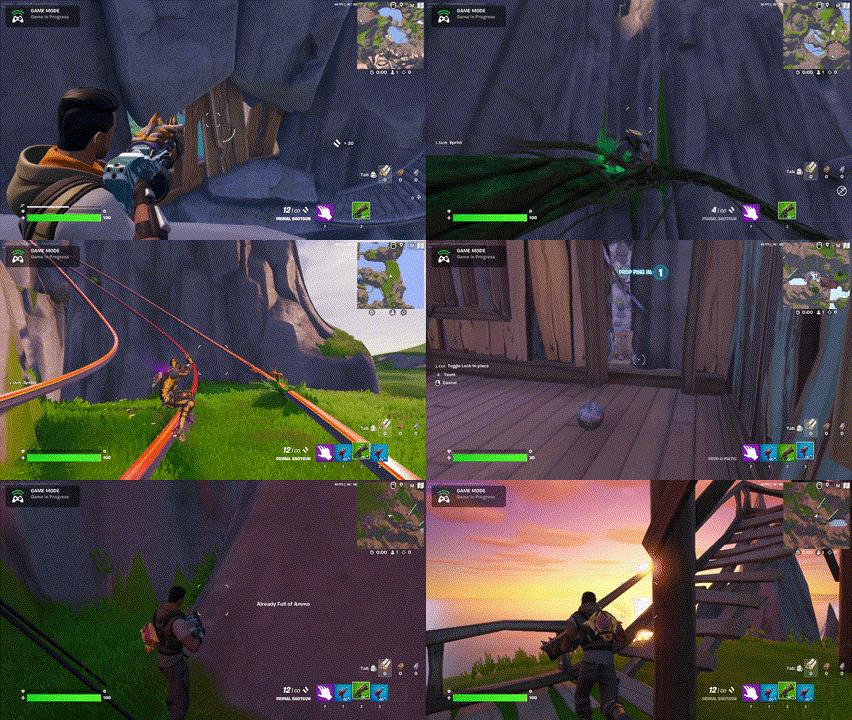
Learning from the novelty that couples with the stunning visuals of each area/theme in It Takes Two, I decided that 3 mechanics I would design the level around would be a shotgun, a prop gun, and a grenade that can launch you upwards.

SHOTGUN

PROP GUN

GRENADE
The player will be asked to use these various tools interchangeable and cooperatively to solve puzzles and platforming challenges.
Shotgun
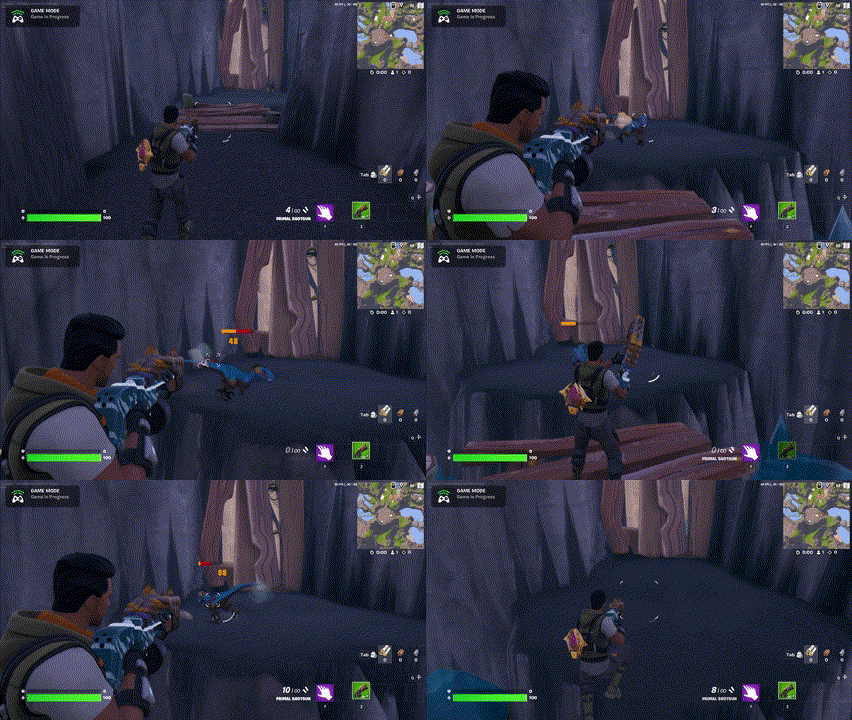
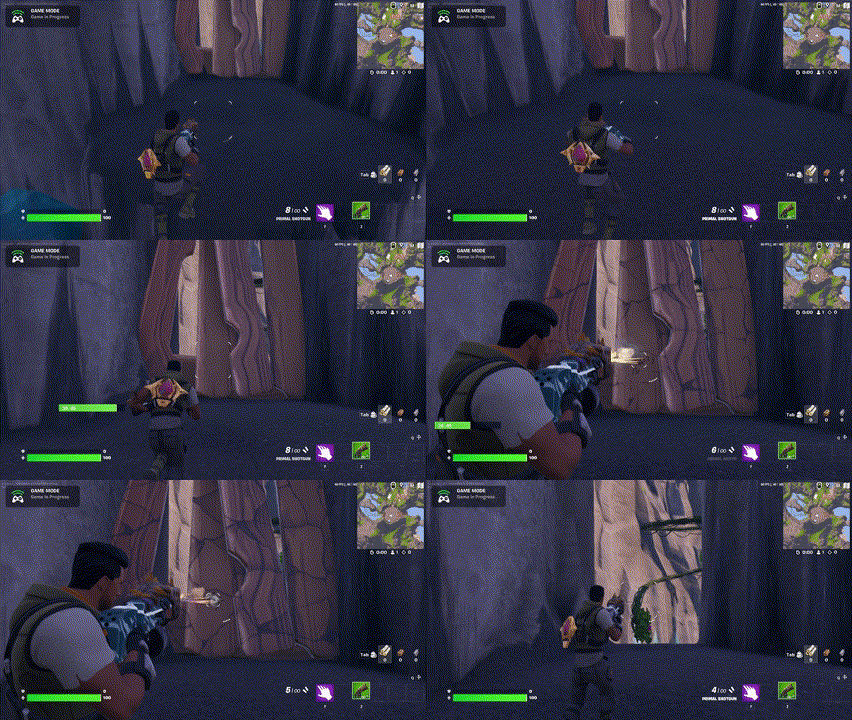
Players who enjoy the act of aiming and shooting with a gun are satisfied but for those who don't, the gun is also used to solve puzzles, destroy obstructions.


Prop Gun
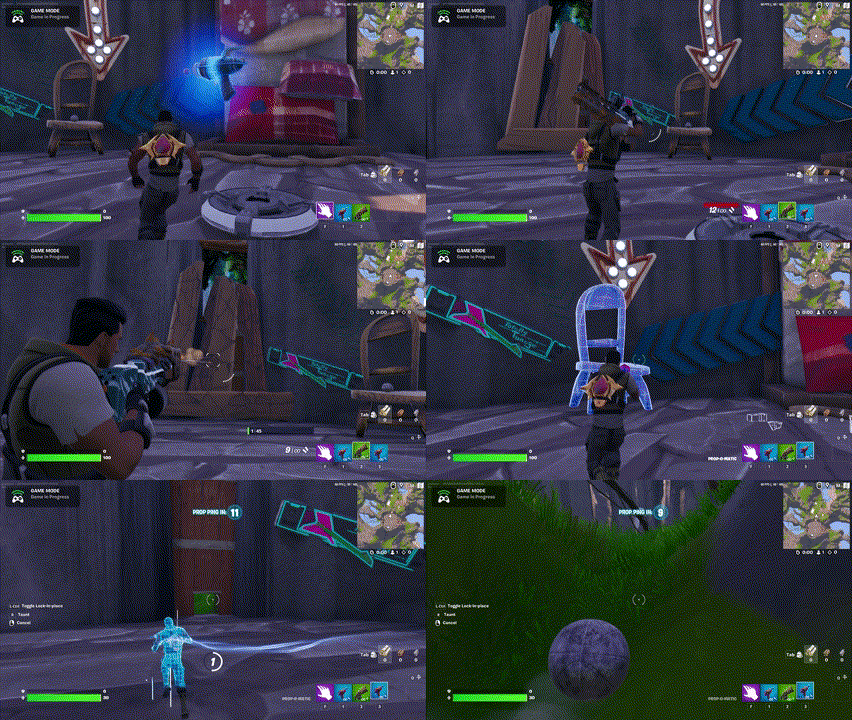
The prop gun is often used in step by step co-op harmony with the shotgun, often to move through small spaces.


Grenade
Impulse grenades in Fortnite have the ability to launch a player outwards if they are in its explosion range. I've designed impulse grenades to be used for the player to launch themselves up to higher, unreachable places.
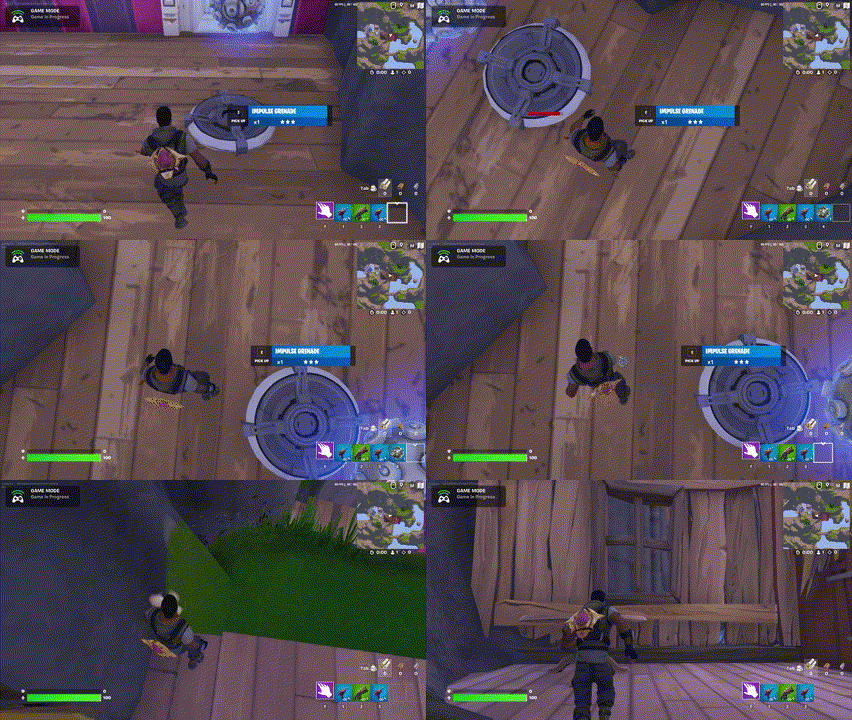

* Regretably, because of time constraints, this mechanic was the least well introduced and fleshed out while being the one with the most potential for interesting puzzle designs.
-
The player is thrown into a room with no direction of where to go but an impulse grenade placed in front of them.
-
Given the opportunity to rework it, I would give the player room to experiment more with what they could do with the new tool.
FLOW STATE
It Takes Two frequently masks its points of refuge with the formula of a challenge. This allows for players of different ages and skill levels to feel challenged or at the very least entertained by the distraction of something to do at points of refuge. This way, the game can get away with having a more points of rest than a typical platformer.
Pacing Chart

Teach
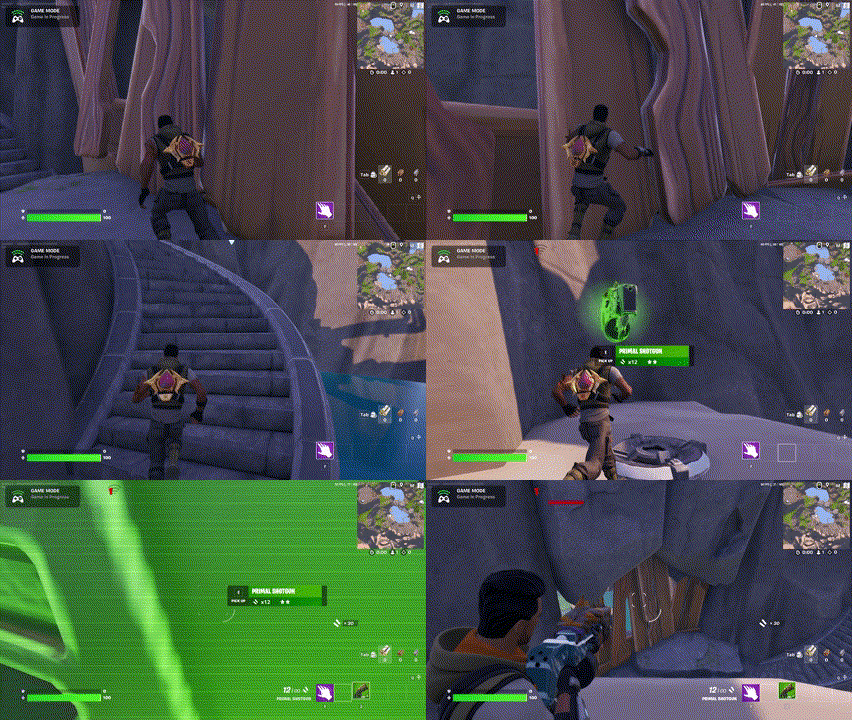
Players need a safe environment to learn each mechanic that is introduced to them and a situation where they are forced to use it. The player might try to go through the wooden door but notice they can't. That will bring their attention up to the platform where there is a shotgun waiting.
Test
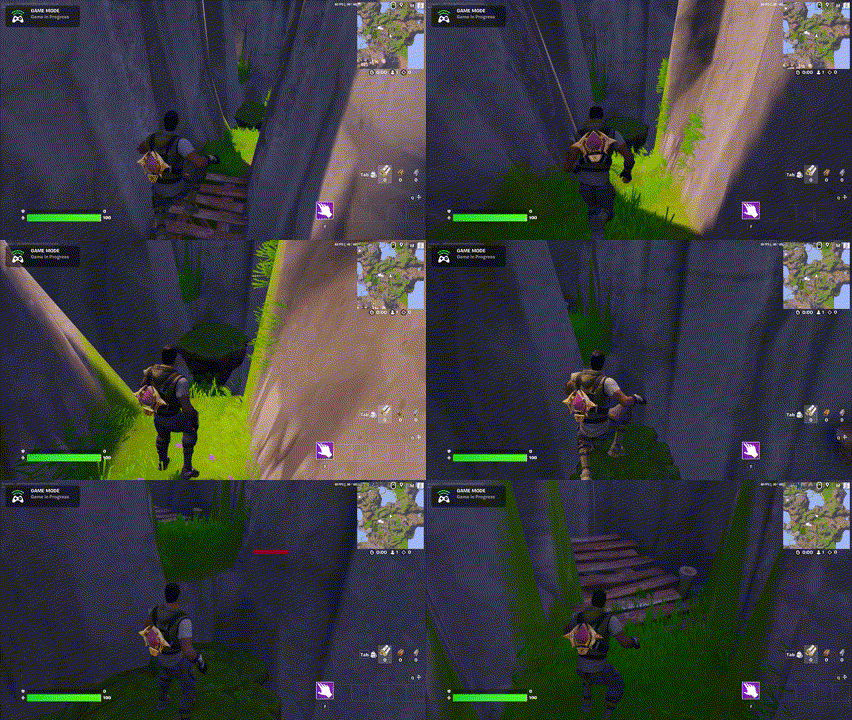
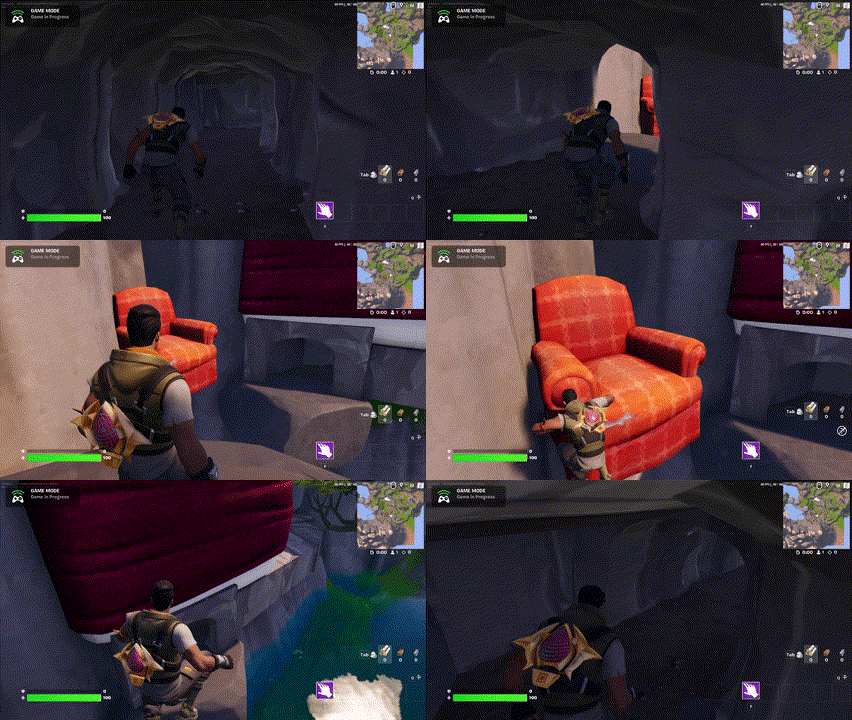
Players are tested for the skills they just learned by being thrown into slightly more daunting situations with more consequence but require only as much knowledge as they were taught.
Challenge
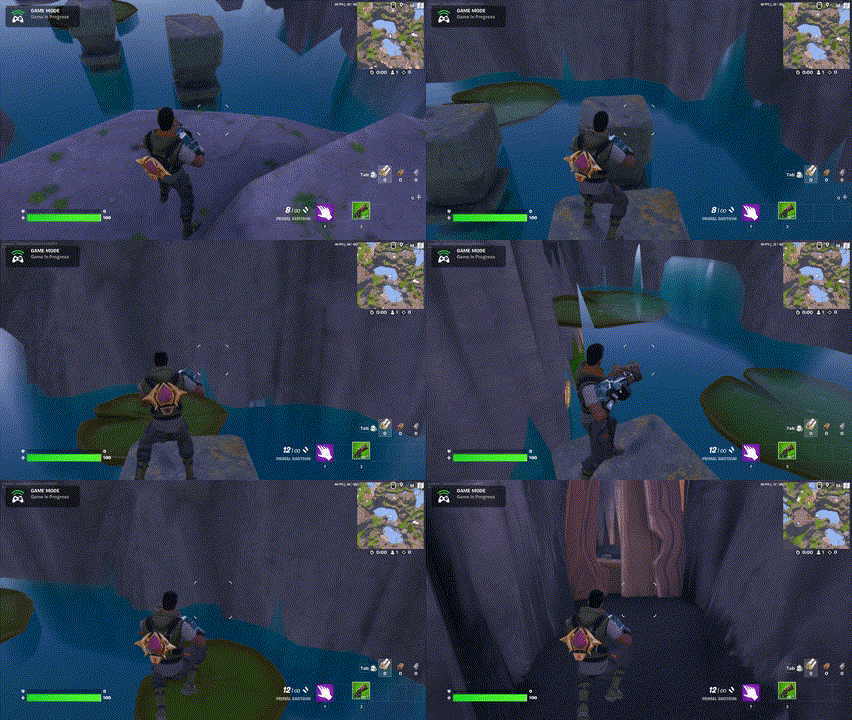
When the player is eventually challenged, ideally they will have been taught and tested well enough to handle new variables added to the challenge. The goal with the addition of these lily pads and moving platforms were to give the illusion of difficulty but still be relatively simple. This way the player will feel satisfied with themselves upon completing it.
Rest
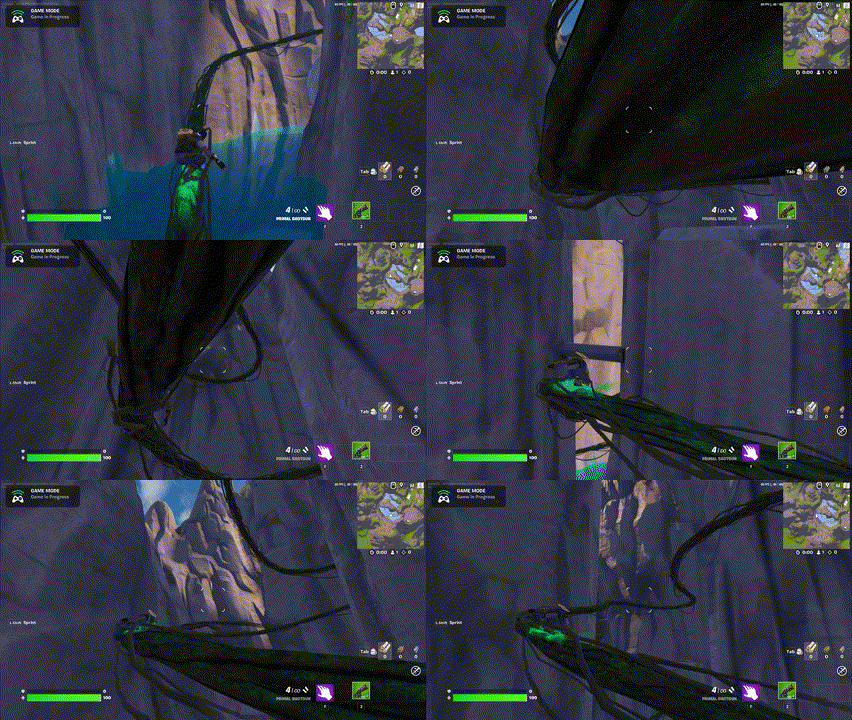
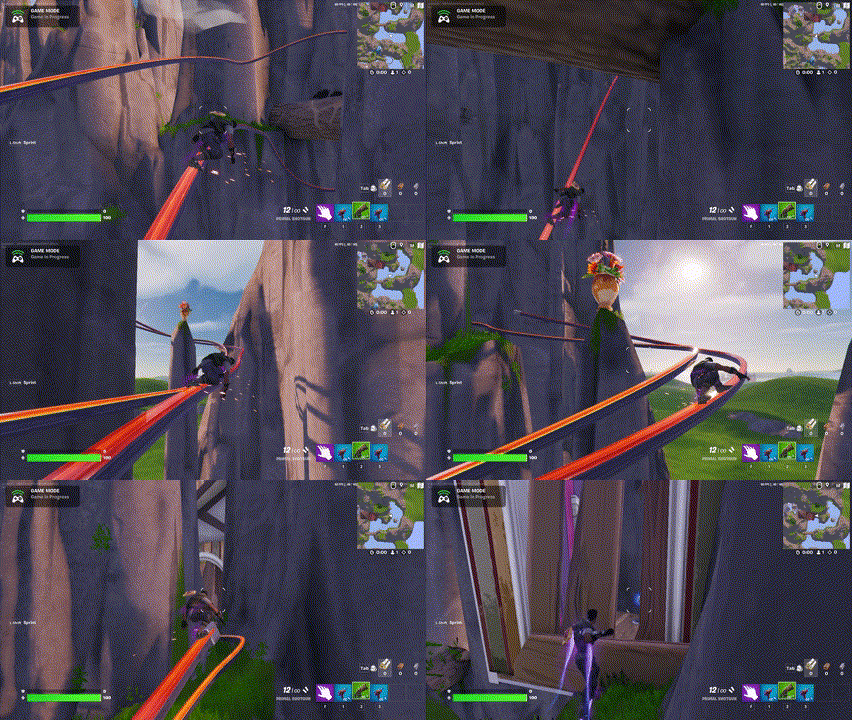
Players are tested for the skills they just learned by being thrown into slightly more daunting situations with more consequence but require only as much knowledge as they were taught.
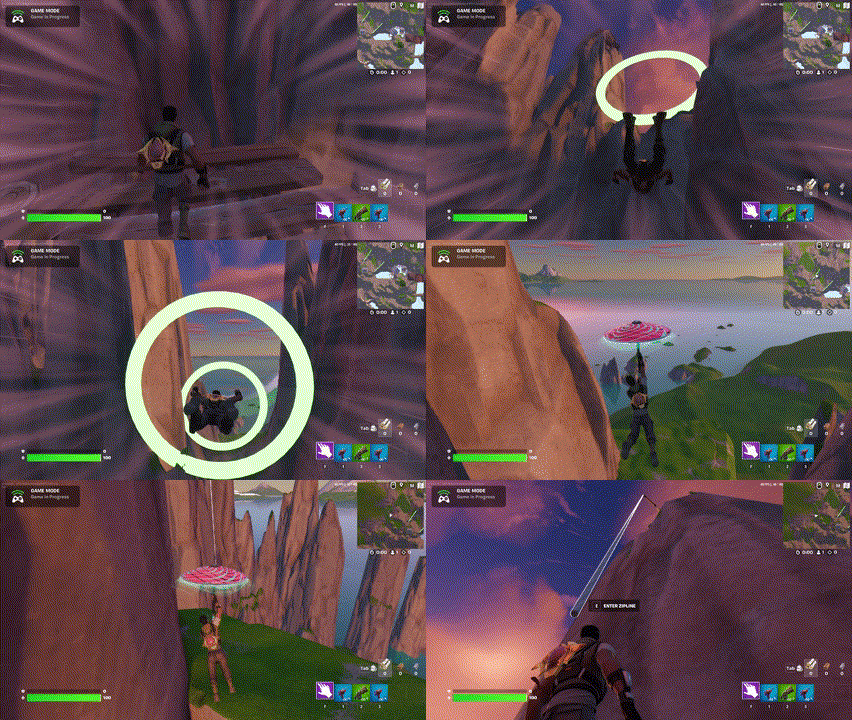
I made sure that there is always some sort of illusion of a challenge so players are neither bored nor struggling.

EXPLORATION

Side Interactions
It Takes Two is littered with minigames and side interactions during points of refuge, when the player is free to explore the visually compelling surroundings that naturally call for curiosity.
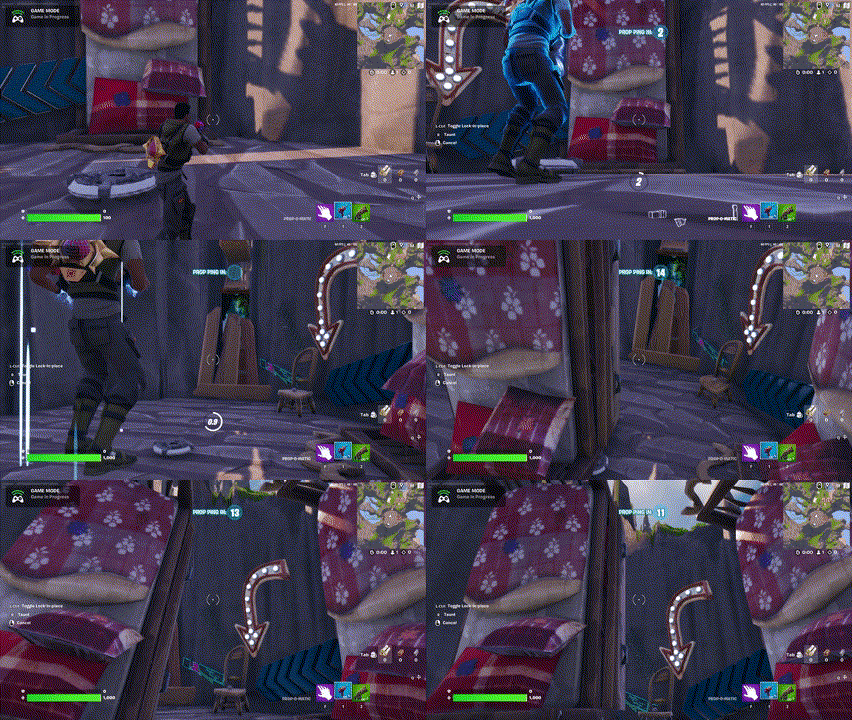
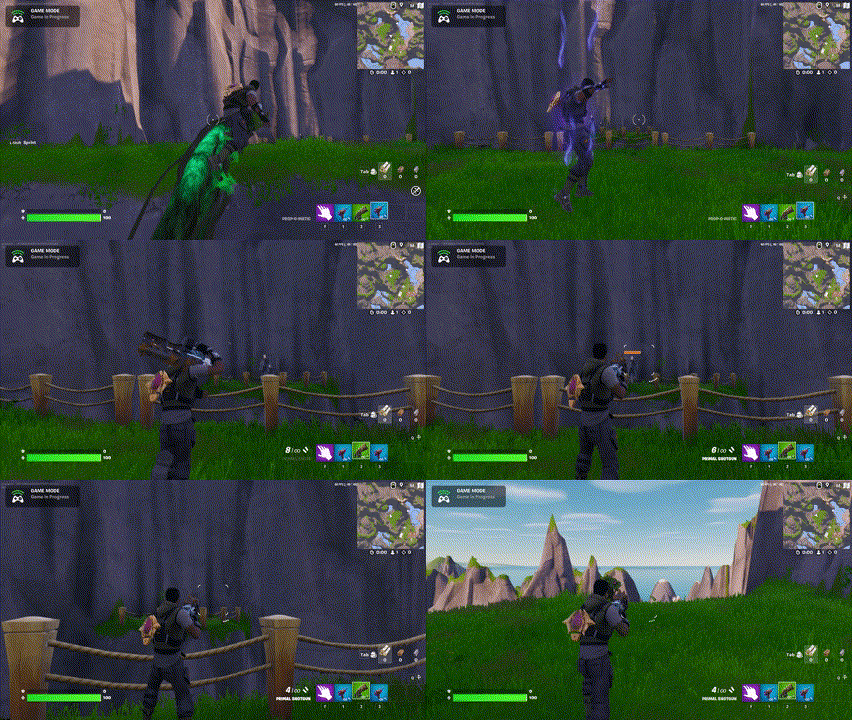
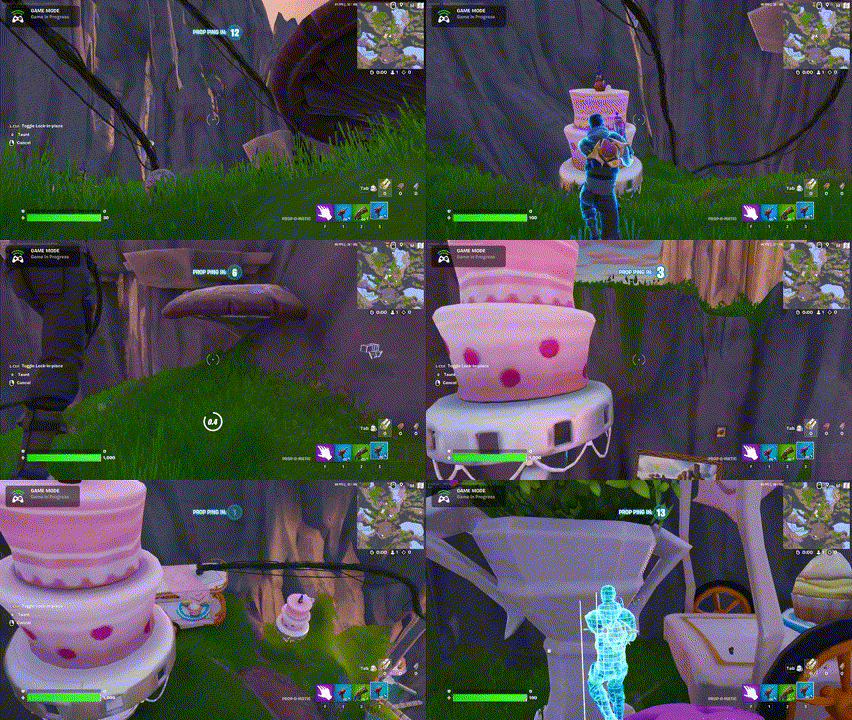
Learning from that, I littered side interactions in certain areas of the level where the character is free to explore before moving on. These side interactions also facilitated practice for the player to mess around with their newly recieved tools.
Specifically:
-
whimsical props to turn into
-
a shooting range
-
a secret only accessible with a jumping puzzle
Previewing Through Scenic Views
A method I used to spark anticipation and tease a new challenge before the player has to face it is by making sure the scenic views of lower intensity moments will preview a future challenge or section.


Sketch plan of canyon in tutorial level showing the foreground, middleground, and background of the first section of gameplay.
The player’s eyes are guided to the left where they are headed but also see that further ahead, there will be a moving platform they have to jump on to and a hole they will have to crouch in. This way, know the kind of challenge they will need to face later but get to practice first on the path to the left.
_edited.jpg)
coming up
_edited.jpg)
The players will view as they are making this small jump that there is a mountainside house in the distance, deliberately framed in their view by a rock opening to direct the line of sight.
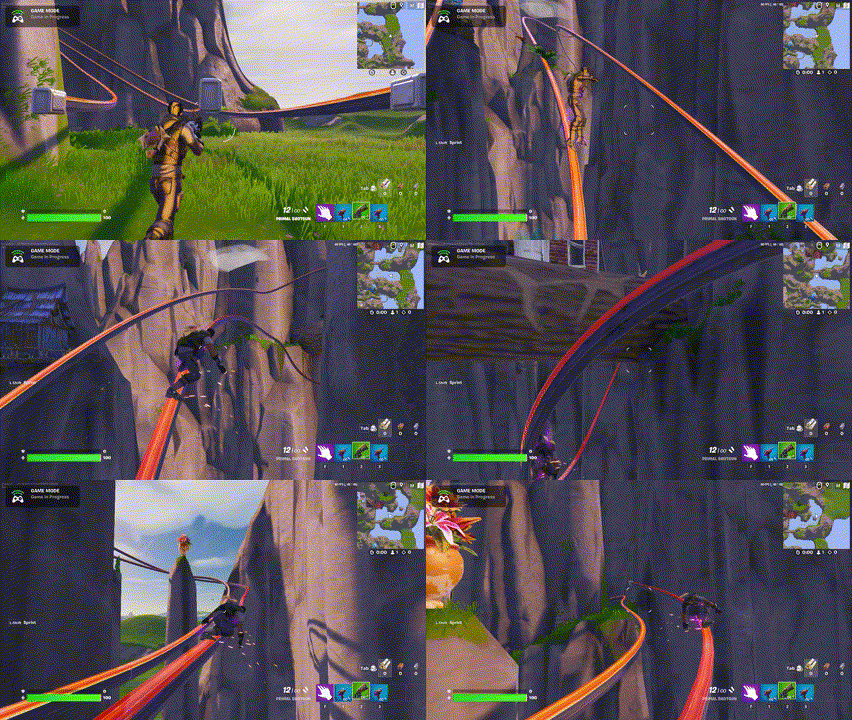
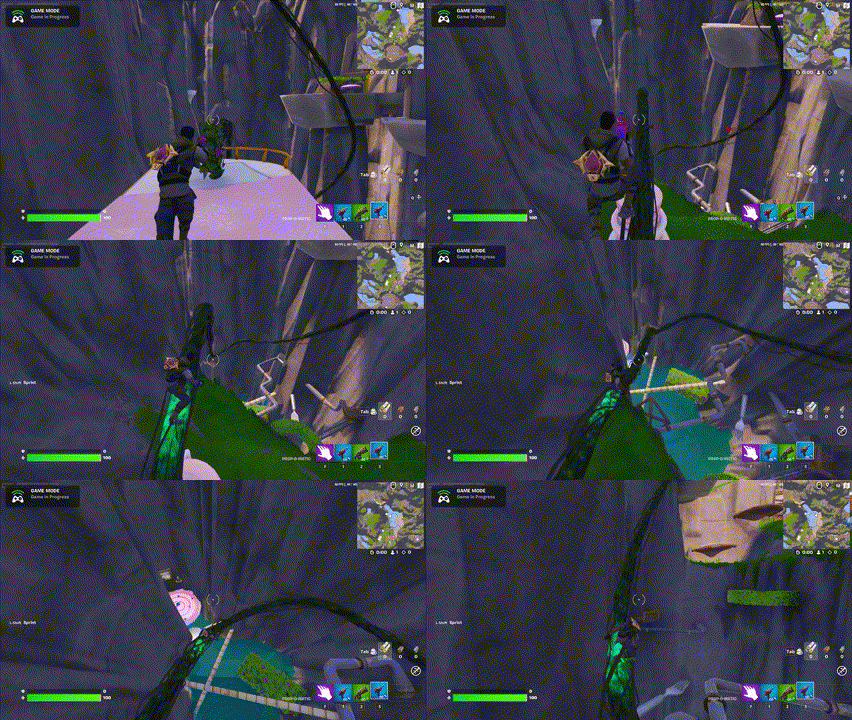
When the player is gliding, they encounter a log bridge in their way before the track narrowly glides around it. On the bridge, there are wolves that are not immediately dangerous to the player, but previews an impending danger on the mountains ahead (no you did not just see a wolf jump off).
Regrettably, the view of it is so brief that you might not be able to tell. Given the opportunity to redo it, I would have the player approch the bridge from a higher position or from further away so it is directly in their line of sight for longer
Post-Playtest Iterations
WAYFINDING & NAVIGATION —OPENINGS AND SIGHTLINES
*Press the arrow keys on the left or right to see the final iteration*

There isn’t enough horizontal space for the player to take a moment to see what is presented in front of them and that there is a path to the left they should take before proceeding.
Action:
-
extended the section so that the player will have a moment of forced deliberation before trying to proceed
-
made more a protrusion out of the wall of the intended path so that the path takes up most of the player’s line of vision, undistracted by the other parts of the level present.
CHALLENGE & DIFFICULTY —CIRCULATION

Jumping off the vines at a high speed will launch the player much further than the cramped layout of the level intends and players will always feel inclined to go really fast on the grind vines so the landing is hard to control as a result.
Action:
-
the section involving vines is made much simpler, removing all the obstacles and other platforming challenges in the same section
-
now its purely a grind vine introduction before the next section with grind vines.
CHALLENGE & DIFFICULTY —ARCHITECTURE
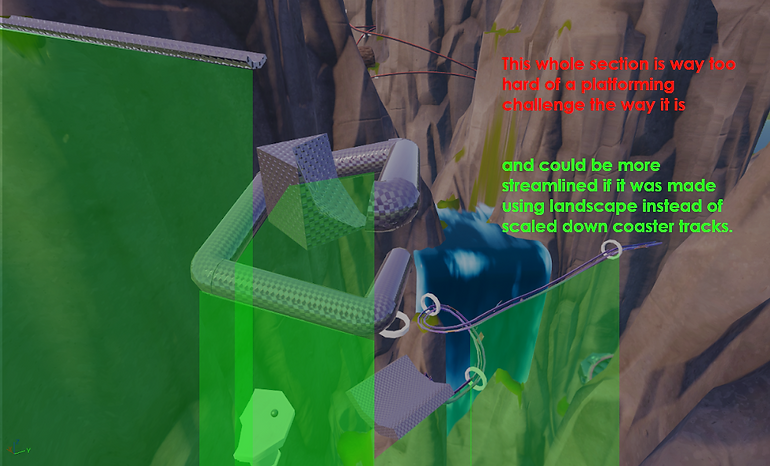
The “marble course” inspired section is impossible. The metrics are off and the player could not get past the area.
Action:
-
transformed the whole area to be way more streamline and more of a prop gun scenic moment than a platforming challenge.
Final Top-Down Map

Full Gameplay Video & LDD


